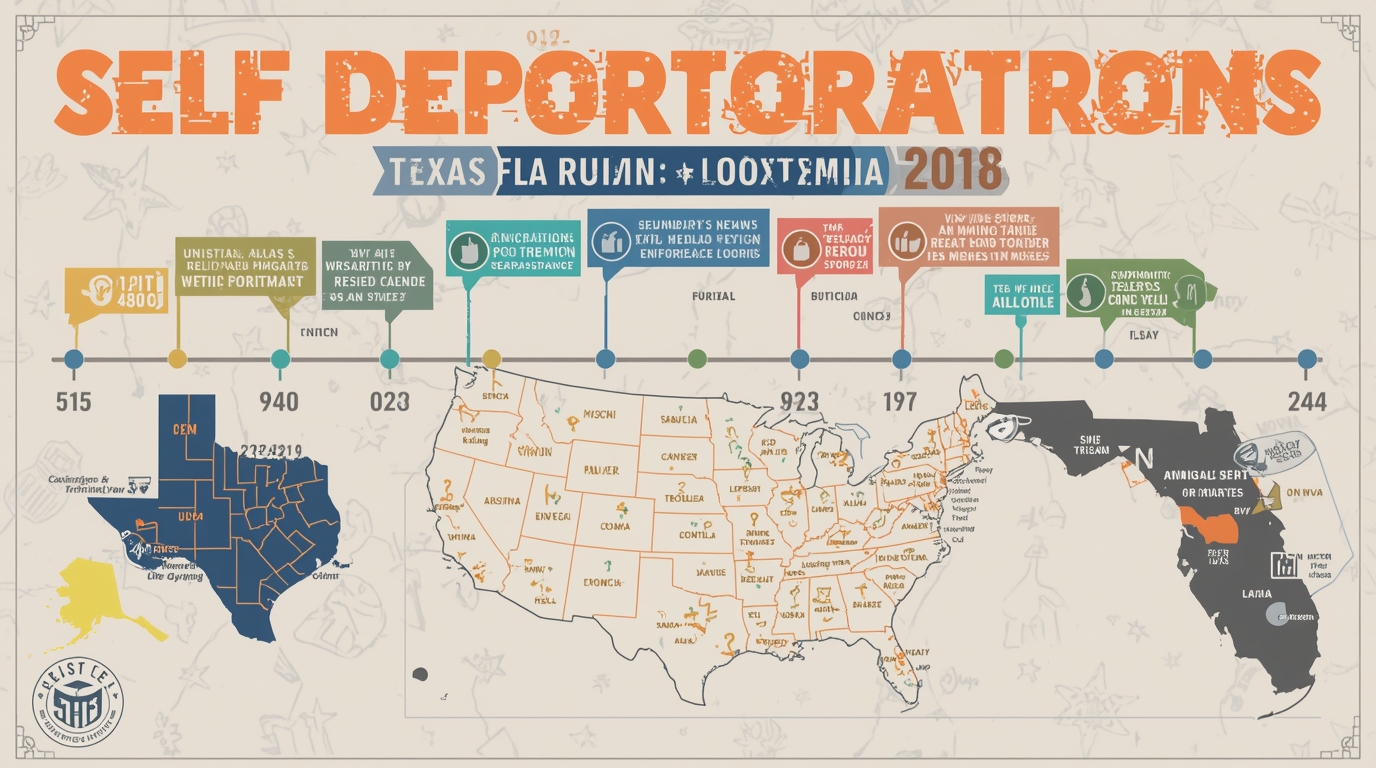
Explore how self deportations impact immigration enforcement and deportation policies. Discover the debate fueling this explosive growth today.
Self deportations have emerged as a polarizing topic in the immigration debate across the United States, reflecting a complex interplay between policy changes, enforcement intensity, and migrant responses. The phenomenon, describing undocumented immigrants voluntarily leaving the country, surged notably during the Trump administration but continues to provoke varied interpretations in 2026 amid shifting political landscapes and enforcement strategies.

Rising Trends in Self Deportations Across the United States
Recent data indicate a marked increase in self deportations, with some regions near the southern border reporting significant upticks in voluntary departures. This trend raises questions about the driving forces behind such decisions, with experts pointing to intensified enforcement measures, increased border security, and evolving policy frameworks as key contributors. The debate often centers on whether these departures reflect a successful deterrence strategy or signal deeper systemic issues within immigration policy.
Regional Impact of Self Deportations
A deep dive into available statistics shows that self deportations are not uniformly distributed across the country. Border states such as Texas and Arizona have experienced higher rates compared to interior states, highlighting the geographic dimension of enforcement impact. This regional disparity underscores the importance of local enforcement practices and community relations in shaping migrant behavior.
Self Deportations Under Trump and Biden Policies
Comparative analysis with previous administrations reveals nuanced differences. While the Trump era famously amplified enforcement, leading to a spike in both formal deportations and self deportations, the Biden administration’s approach has seen fluctuations influenced by policy reversals and enforcement recalibrations. Notably, the volume of voluntary departures under the Trump administration, often cited as a measure of its tough stance, must be contextualized within broader immigration trends and external factors such as economic conditions and international migration pressures.
Economic and Social Effects of Self Deportations
The socioeconomic repercussions of self deportations are multifaceted. Families fractured by these decisions face long-term challenges, including economic instability and social dislocation. Communities that rely on immigrant labor and participation also grapple with labor shortages and social dynamics shifts. These aspects often remain underexplored in mainstream discussions but are critical for understanding the full impact of enforcement policies.
Policy experts emphasize the role of perception and information dissemination in influencing self deportation decisions. The fear induced by enforcement rhetoric, combined with varying levels of access to legal information, creates an environment where migrants may opt for voluntary departure over formal deportation processes. This suggests that self deportations can be as much about psychological and social conditions as about legal realities.
An illustrative case highlighting the human dimension involves families choosing to leave voluntarily to avoid protracted detention or legal battles. Such personal stories offer valuable insight into the lived experience behind statistics and the importance of compassionate policy frameworks. They also speak to the complexities faced by immigration authorities balancing enforcement with humanitarian considerations.
Public Opinion on Self Deportations
Amidst this debate, public opinion remains divided. According to a recent survey by Pew Research, Americans hold mixed views on deportation policies, reflecting broader societal divisions influenced by political affiliation, regional location, and exposure to migration issues. Understanding these perceptions is vital for policymakers striving to craft balanced immigration reforms that address enforcement realities while considering humanitarian impacts.
In addition, recent scholarship and reports underscore the need for careful analysis of the trend in self deportations. Resources such as the Center for Immigration Studies provide detailed examinations of data patterns and policy contexts, offering valuable perspectives on this complex phenomenon. A detailed CIS report sheds light on the contentious nature and implications of voluntary deportations.
Economists have also weighed in, evaluating the economic dimensions of self deportations. Some argue that while it may temporarily ease immigration enforcement burdens, the long-term economic impacts on both sending and receiving communities warrant thorough examination. The Economic Liberty Foundation provides an analytical lens on how self deportation interacts with labor markets, economic incentives, and policy efficacy.
For readers seeking to understand the broader societal context, the Pew Research Center’s insights on public attitudes towards deportations offer valuable context that complements the policy and enforcement analysis. These insights help frame the immigration debate within the wider discourse on race, ethnicity, and national identity.
The conversation about self deportations also intersects with issues of transparency and justice in the immigration process. The controversy surrounding courtroom practices, as highlighted in the introduction of cameras in courtrooms, raises questions about how immigration hearings and enforcement actions are monitored and understood by the public. Greater transparency could influence both policy implementation and migrant responses.
Future Outlook for Self Deportations
As the immigration debate unfolds, self deportations remain a powerful indicator of the complex dynamics between enforcement policies and migrant agency. Their rise prompts critical examination of the efficacy and ethics of current approaches, with implications extending well beyond the immediate legal framework. Policymakers and stakeholders must grapple with these realities to forge sustainable, humane immigration solutions responsive to economic, social, and political dimensions alike.


About the Author