Discover how the New York Commissioner uncovered shocking school board election fraud impacting education and governance. Learn the full story now.

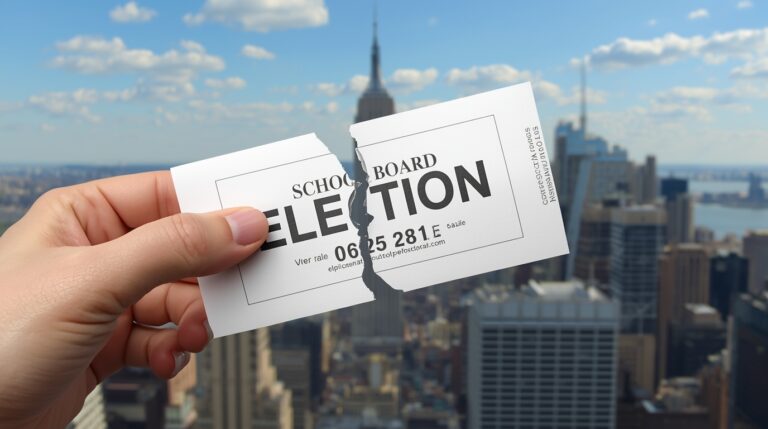
School board election fraud shook the Long Island community when New York authorities uncovered significant irregularities in the recent balloting process. The case highlights vulnerabilities in local election systems and raises urgent questions about ensuring election integrity in education governance.
The New York State Commissioner ordered a fresh school board election after uncovering evidence of tampering and procedural violations in the initial vote. The investigation traced irregularities in voter registrations, ballot handling, and result tabulations, prompting swift state intervention to preserve democratic legitimacy. Such decisive action underscores the growing scrutiny on school board election fraud cases in New York amid heightened public concern.
Table of Contents
School Board Election Fraud and Ballot Irregularities
At the heart of the controversy was a pattern of ballot manipulation that involved unauthorized absentee ballots and suspicious entries on voter rolls. These breaches were uncovered through a meticulous audit of election materials, where officials cross-referenced reported outcomes with physical ballots and registration data. This rigorous verification process aligns with broader efforts seen across the state to enhance electoral transparency and accountability, particularly in critical contests shaping local education policies.
Amidst the investigation, stakeholders from parent groups, educators, and local officials have expressed alarm over the breach of trust. “Our school board elections are foundational to community representation and must be beyond reproach,” noted a local education advocate. Such sentiments reflect broader concerns about how election fraud not only distorts educational governance but also erodes confidence in public institutions.
School Board Election Fraud Reforms and Election Integrity
The ordered new election, scheduled by the state, is being closely watched as a test case for implementing stronger safeguards against election fraud. These reforms include more stringent voter identification requirements, enhanced oversight during ballot processing, and improved public transparency regarding election protocols. Collectively, these steps seek to prevent recurrence of ballot tampering and restore faith in school board elections’ integrity.
How School Board Election Fraud Investigations Work
Understanding how election fraud is investigated in school board elections is crucial for communities nationwide. New York’s enforcement approach, detailed by the state’s election oversight office, combines thorough forensic audits with legal scrutiny of suspected actors, ensuring that violations face appropriate consequences. This methodology not only addresses specific instances but also deters future misconduct through systemic improvements. More about these procedural standards can be found on the New York State Election Enforcement website.
School Board Election Fraud Impact on Local Education Governance
Educational governance experts emphasize that the implications of such fraud extend beyond a single election cycle. Persistent vulnerabilities undermine policymaking continuity and risk fostering cynicism among voters and stakeholders alike. The Long Island case serves as a warning that safeguarding election integrity must be prioritized in school districts across the country to maintain democratic accountability in education.
This story intersects with wider conversations on education reform and governance challenges covered extensively in New York education news. It also parallels notable incidents of election-related legal actions, such as cases involving criminal custody that tangentially impact public trust in local governance, exemplified by reports like the Thai woman in custody article on election-related investigations.
Long-term, such high-profile investigations push policymakers and community leaders to consider comprehensive reforms. These may incorporate advanced auditing technologies, continuous election staff training, and community education campaigns about voting rights and responsibilities. Together, these measures aim to build resilient election systems that inspire voter confidence and protect the foundational principles of democratic participation.
The new election process and ensuing reforms represent not just a corrective step but a critical opportunity for systemic change. Strengthening electoral integrity in school board races safeguards the very institutions shaping America’s future generations. Without such measures, the persistence of election fraud risks fracturing community trust and weakening the democratic fabric at the local level.
For further details on the Long Island new election orders and the ongoing response to school board election fraud, readers can consult the comprehensive news coverage at the New York Post’s report on the school election re-run. This coverage provides insights into the state’s decisive actions and evolving policy implications.
School board election fraud challenges the integrity of local education governance but also opens a dialogue for reform and vigilance. Vigilant enforcement and community engagement remain vital to preserving the sanctity of elections and ensuring that school boards reflect the true will of their communities.

About the Author