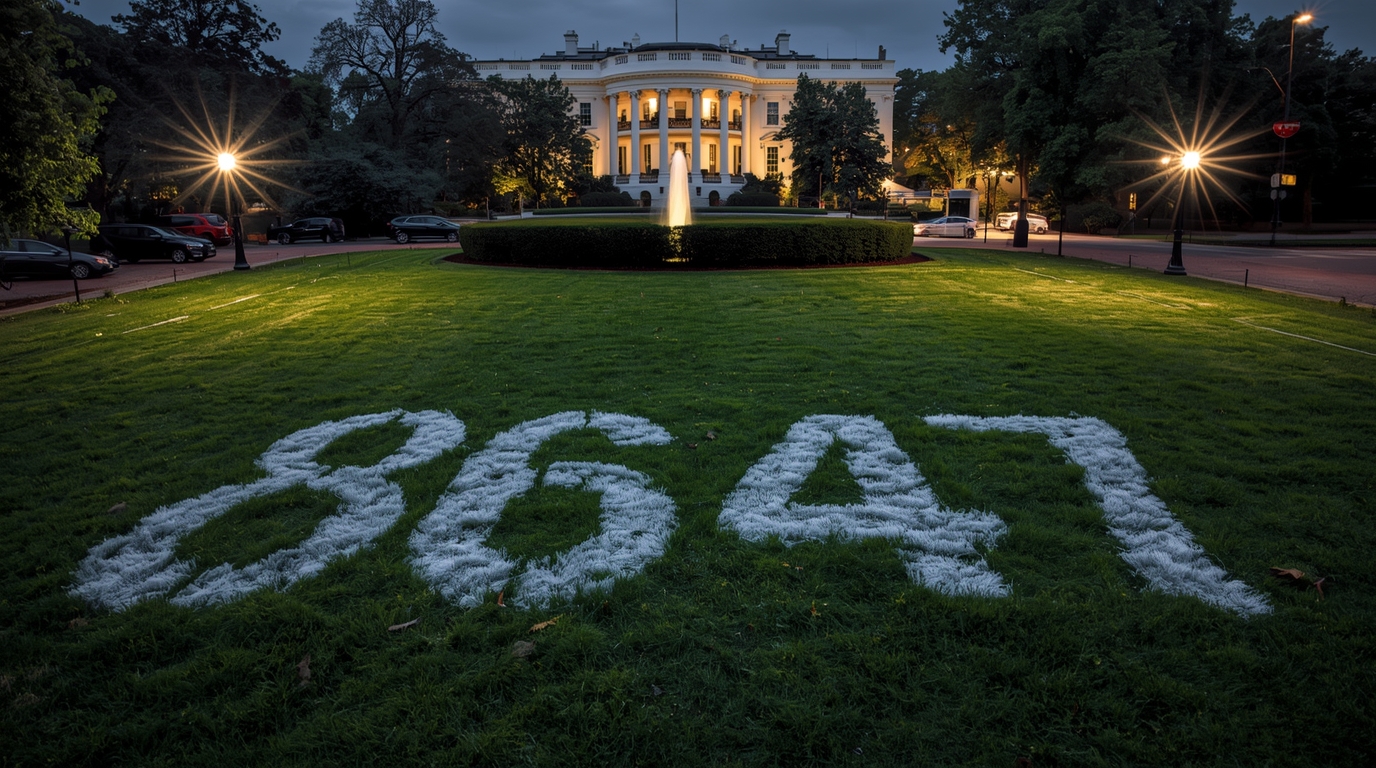
Discover the shocking 8647 National Mall vandalism linked to anti-Trump acts sparking a federal investigation National Mall. Learn more now.

The 8647 National Mall vandalism incident has sparked a significant federal investigation, drawing national attention to a bold act of political defacement at one of the country’s most iconic public spaces. This incident involves a large display of the numbers “8647” marked prominently on the grass of the National Mall in Washington, D.C., raising questions about its symbolism and political message.
Table of Contents
What Is the 8647 National Mall Vandalism Controversy?
The numbers “8647” have become emblematic within certain political circles, particularly as a form of protest or critique against former President Donald Trump. The sequence is often interpreted as a numeric stand-in that conveys opposition, although its precise origins and interpretations vary among protest groups and commentators. Understanding this code requires delving into contemporary political discourse and the cultural symbolism that activists deploy.
The vandalism at the National Mall was discovered just days before a significant political event, amplifying its visibility and urgency. The markings, created by etching or staining the grass, covered an unusually large area, transforming the usual serenity of the Mall into a provocative political statement. Authorities quickly took note, given the Mall’s status as a historic and protected federal space that regularly hosts demonstrations, but rarely suffers deliberate damage of this scale.
8647 National Mall Vandalism Triggers Federal Investigation
Federal authorities responded swiftly, launching a detailed investigation into the incident. The response includes coordination between Capitol Police, the National Park Service, and federal law enforcement agencies tasked with protecting national monuments and public lands. Surveillance footage and witness statements are being reviewed to identify those responsible. The investigation underscores the gravity with which the government treats vandalism acts, especially those intertwined with charged political symbolism.
Public Reaction to the 8647 National Mall Vandalism
Public and political reactions to the vandalism have been mixed. Some view the act as a legitimate form of political expression reflective of growing societal divisions, while others condemn it as unlawful destruction of public property. The incident has prompted calls for a balanced approach that respects free speech guarantees but also maintains national landmarks’ integrity. Such debates echo wider conversations about protest methods and their impacts on public spaces.
Past National Mall Vandalism Cases and Political Protests
The 8647 National Mall vandalism is not an isolated incident. Historically, the Mall has been a site for numerous political demonstrations and occasional vandalism, with episodes ranging from graffiti to symbolic damage during heated political climates. These events often reflect larger societal conflicts and contests over national identity and historical memory. Examining these past incidents provides insight into the persistent tensions animating American political protest culture.
Legal Consequences of the 8647 National Mall Vandalism
From a legal and security perspective, the incident raises important questions about protecting federal property amid increasing political activism. Agencies are evaluating whether additional security measures are necessary to prevent reoccurrences and how to enforce penalties against those who deface public land. Balancing security with public access remains a contentious issue for officials who manage the Mall and similar national sites.
Why the 8647 National Mall Vandalism Matters
As investigations continue, the 8647 National Mall vandalism remains a focal point for discussions on political expression, property rights, and national symbolism. Authorities have pledged transparency in updates, emphasizing their commitment to upholding the rule of law while respecting constitutional rights. The situation also serves as a reminder of the complex dynamics at play when politics unfolds in public spaces.
For further contextual understanding of the broader political controversies influencing such acts, readers may find insights in assessments of related public opinion and policy debates, such as those discussed in Trump criticism and Minnesota policy issues. Detailed media coverage helps explain the significance and public response around this case, including visual accounts at ABC7’s report on the 8647 markings. Similarly, law enforcement’s role and the political context of protests are well-documented in video coverage from Fox News on the federal investigation and reports on clashes at political rallies, such as those described by PBS NewsHour.
Readers are encouraged to follow ongoing updates as federal authorities work to resolve this high-profile case, and to engage in informed discussions about the balance between political expression and preservation of public heritage. The incident stands as a complex symbol of current political divides and challenges facing democratic discourse in public spaces.

About the Author