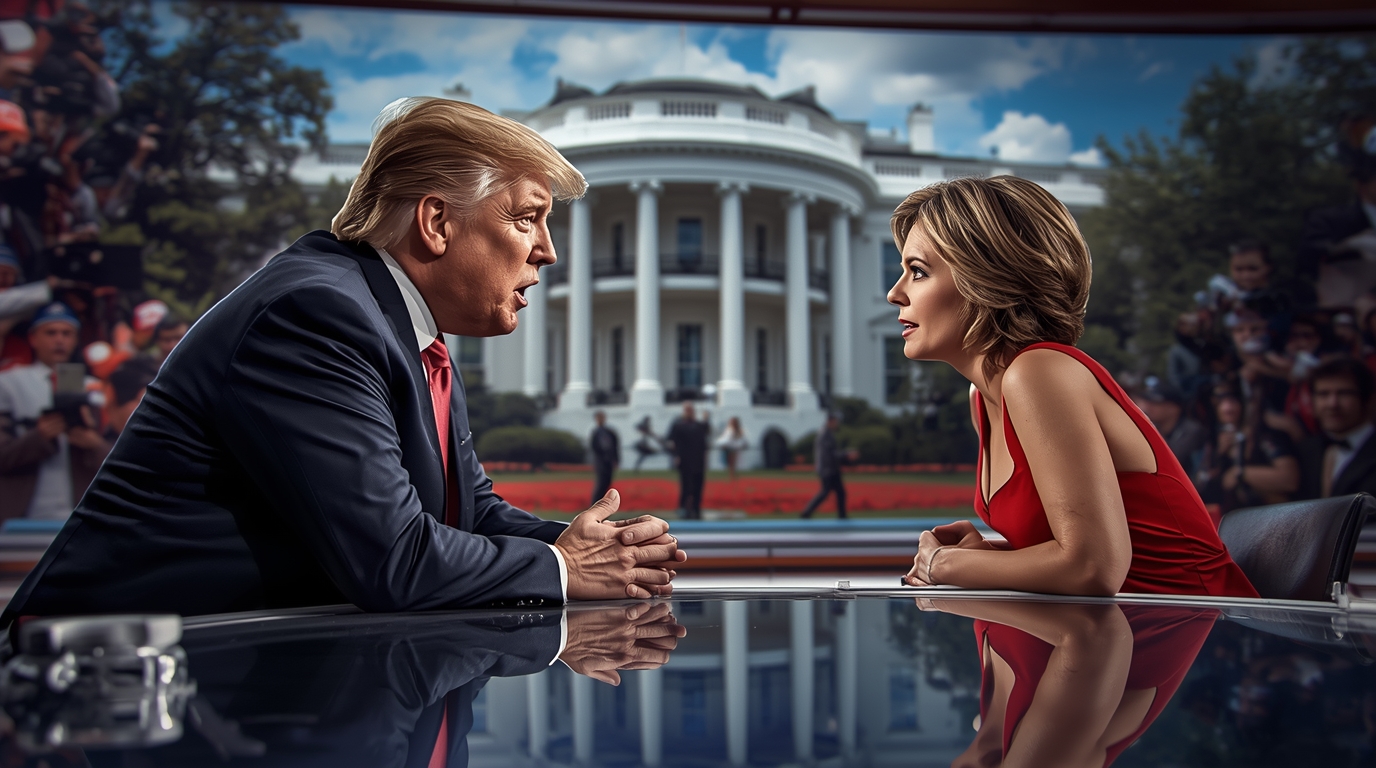
Explore how President Trump fake news claims fueled a fiery debate with Jonathan Karl at the White House Correspondents' Dinner. Discover the details now.

President Trump fake news allegations surged yet again after a contentious exchange with ABC News journalist Jonathan Karl, underscoring the persistent conflict between the former president and mainstream media. Following a chaotic episode at the 2018 White House Correspondents’ Dinner (WHCD) and subsequent claims that Trump personally called to check on Karl after a shooting scare—a claim he vehemently denied—the spotlight turned once more to Trump’s repeated accusations of fake news.
Table of Contents
President Trump Fake News Claim and WHCD Incident
The genesis of this latest controversy stems from a now-retracted report that suggested Trump reached out directly to Karl following an incident at the WHCD. According to the reporter, Trump allegedly asked, “Are you all right?” in the aftermath, referencing an attempted assassination at the dinner—a claim both parties have since dismissed. The confusion was quickly amplified on social media and fueled debates around media bias, echoing years of tense White House–press relations.
President Trump Fake News Response to ABC Report
Trump, never one to shy away from amplifying his position, immediately attacked the coverage. He labeled the report as another example of what he calls the “President Trump fake news” epidemic. This broad-brush labeling of unfavorable coverage has been a hallmark of Trump’s presidency and post-presidential commentaries.
President Trump Fake News Dispute with Jonathan Karl
Jonathan Karl, an ABC News veteran and prominent voice in the White House press corps, has a storied history with Trump. Karl’s reporting, often scrutinized by the Trump camp, has landed him in contentious territory. Their adversarial relationship has played out across press briefings and on social media. The latest incident is an echo of past grievances, deepening the chasm between the Trump camp and national media heavyweights. For many observers, this dustup was reminiscent of prior episodes in which the former president’s clashes with journalists became headline news. According to a detailed account in the New York Times on Trump-media relations, these episodes often catalyze partisan rifts over the legitimacy of mainstream reporting itself.
Media Reaction to President Trump Fake News Claims
Broader media reactions reveal deep polarization. Some outlets criticized ABC for the quick dissemination of unsubstantiated claims, forcing the network into an awkward retraction and apology. Others framed the episode as another Trump-fueled assault on independent journalism. The rapid spread—and retraction—of the story fueled debates on how quickly broadcast giants respond to high-drama events, especially in the pressure cooker of post-Trump political cycles.
The sensational framing of the alleged assassination attempt at the WHCD—later proven false—added another layer to the “fake news” controversy. While security responded swiftly and no real threat materialized, the ricochet effect in public discourse was significant. Many on social media expressed fatigue and concern over the blurred lines between fact and partisan framing, a phenomenon exemplified not just by this incident, but by Trump’s broader hyper-focus on media bias and institutional trust.
The fallout also reignited focus on Trump’s expanding claims about tech company bias and the infamous “Google rigged search” narrative, where he alleged search engines suppressed conservative views. The Trump-ABC dispute is just one example in this ongoing battle—one that has drawn in platforms, journalists, and a divided public. For context, other cases such as the report on U.S. action in the Strait of Hormuz have similarly intersected with questions around reporting accuracy and editorial accountability.
Additional coverage by local and national outlets demonstrates the complexity of real-time political reporting. For instance, Fox Baltimore’s account of Trump denying the call to Jonathan Karl reveals how stories are shaped and shared differently depending on institutional priorities and audience trust levels. In turn, new cycles become not just a recounting of events but proxies for larger wars over narrative.
Given the steady stream of incidents involving claims of media bias, both supporters and critics of Trump continue to scrutinize every exchange for deeper significance. The public’s understanding of what constitutes “fake news” has itself evolved, influenced by the strategic maneuvering of politicians and the rapid corrections—sometimes retractions—by the press. Media critics, meanwhile, highlight such episodes as a call for renewed standards in political journalism. For further detail on how Trump has responded to and shaped media coverage during turbulent times, see analyses such as the Daily Beast report on Trump’s reaction to ABC claims.
Impact of the President Trump Fake News Debate
Ultimately, the latest President Trump fake news controversy encapsulates the fraught relationship between Trump, high-profile journalists such as Jonathan Karl, and the public at large. Each episode underscores how modern political reporting—in an era shaped by both speed and spectacle—continues to shape, and sometimes distort, the boundaries between reporting, bias, and fact. The WHCD misquote and ensuing media storm serve not only as fodder for partisan debate, but as a cautionary tale for journalists and news consumers navigating an ever-evolving information landscape.
About the Author