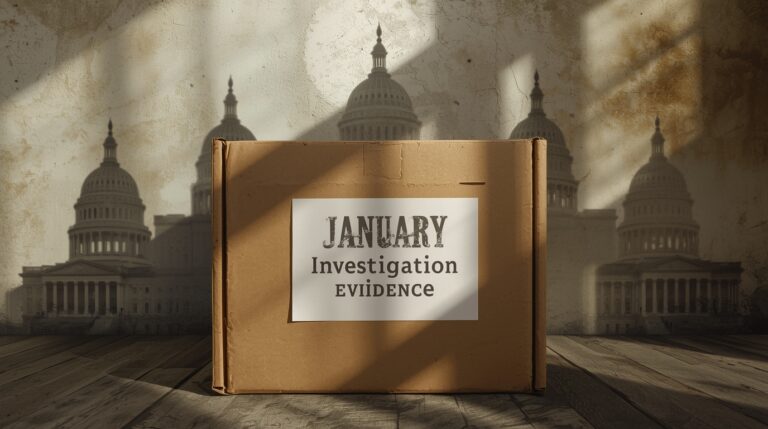
January 6 investigation evidence reveals government secrets and impacts public trust. Discover the truth and demand transparency today.

The January 6 investigation evidence has uncovered deeply unsettling revelations about government secrecy and procedural delays, raising serious questions about accountability and transparency. Months after the Capitol riot, new legal motions have spotlighted significant concealment by the Department of Defense (DoD) Inspector General and delayed deployment of the National Guard, suggesting a troubling pattern of obstruction that challenges democratic norms.
The background of the January 6 investigation is layered with intense scrutiny of the events leading to and following the violent breach at the U.S. Capitol. The January 6th Select Committee dug extensively into how federal agencies responded—or failed to respond—to the crisis, revealing deficiencies in preparedness and communication. Central to the controversy is the delayed activation of the National Guard, a move now uncovered as part of a broader concealment effort by the DoD officials. These findings emerged as motions were filed to compel the production of previously withheld government records, spotlighting allegations of government record deletion and DOJ database removal aimed at hiding crucial evidence.
Table of Contents
January 6 Investigation Evidence and Government Transparency Concerns
Experts note that such delays and concealment impede not only justice but also public trust. Legal analysts explain that motions to expose government-held evidence follow pivotal legal precedents ensuring oversight of executive actions in times of crisis. According to constitutional scholar Dr. Erin Fielding, “The obstruction of lawful investigations undermines the Republican form of government and raises the stakes for enhanced judicial intervention.” This legal battle echoes historical cases where government transparency was fiercely contested, underscoring the essential role of accountability in democracy.
January 6 Investigation Evidence on National Guard Deployment Delays
The delayed response by Pentagon leadership, accused of protecting political figures rather than upholding duty, has compounded suspicions. Critics argue that the Pentagon prioritized political considerations, delaying the National Guard deployment despite clear threats. This dynamic links closely with evidence that the DoD Inspector General concealed critical operational timelines and incident footage, a revelation that fueled accusations of a broader cover-up, including the so-called concealed Pelosi footage January 6 discussions. Such revelations emerge amid heightened calls for transparency as articulated by organizations dedicated to government transparency principles, which insist that withholding information erodes democratic accountability.
anuary 6 Investigation Evidence and FBI Source Controversies
Adding complexity to the investigation are developments involving an FBI confidential human source investigation intertwined with the broader inquiries, raising questions about law enforcement’s role during the Capitol events. This facet exposes the opaque nature of intelligence activities and fuels debate on the balance between security and civil liberties. The continuing saga also reveals how digital records connected to January 6 have been subject to removal from DOJ databases, further complicating efforts to assemble a complete factual record.
How January 6 Investigation Evidence Affects Public Trust
The impact of these unfolding revelations extends beyond legal ramifications, striking at public confidence in federal institutions. The perceived sustained secrecy over “hidden J6 evidence DoD delay” and government reluctance to cooperate fully with the January 6th Select Committee sparks a broader civic discourse on the health of American democracy. Media coverage and public interest remain high, with in-depth documentation accessible through official channels like the extensive January 6th Committee final report and curated archives such as the NPR January 6 archive, offering detailed context and firsthand accounts.
Meanwhile, ongoing legal challenges, such as those highlighted by the recent federal appeals court ruling regarding former President Trump, illustrate the complex and evolving nature of January 6 investigations and related judicial processes. This intersection evidenced in parallel is shaping the broader landscape of political and legal repercussions.
The sustained efforts to unveil the January 6 investigation evidence underscore the fragility of institutional trust when confronted by governmental opacity. As more details about the DoD Inspector General’s concealment and National Guard deployment delays surface, the demand for full disclosure and responsibility intensifies. This chapter in U.S. history illuminates the perils of secret maneuvers within democratic frameworks and the indispensable need for vigilant oversight to safeguard democratic integrity.

About the Author